
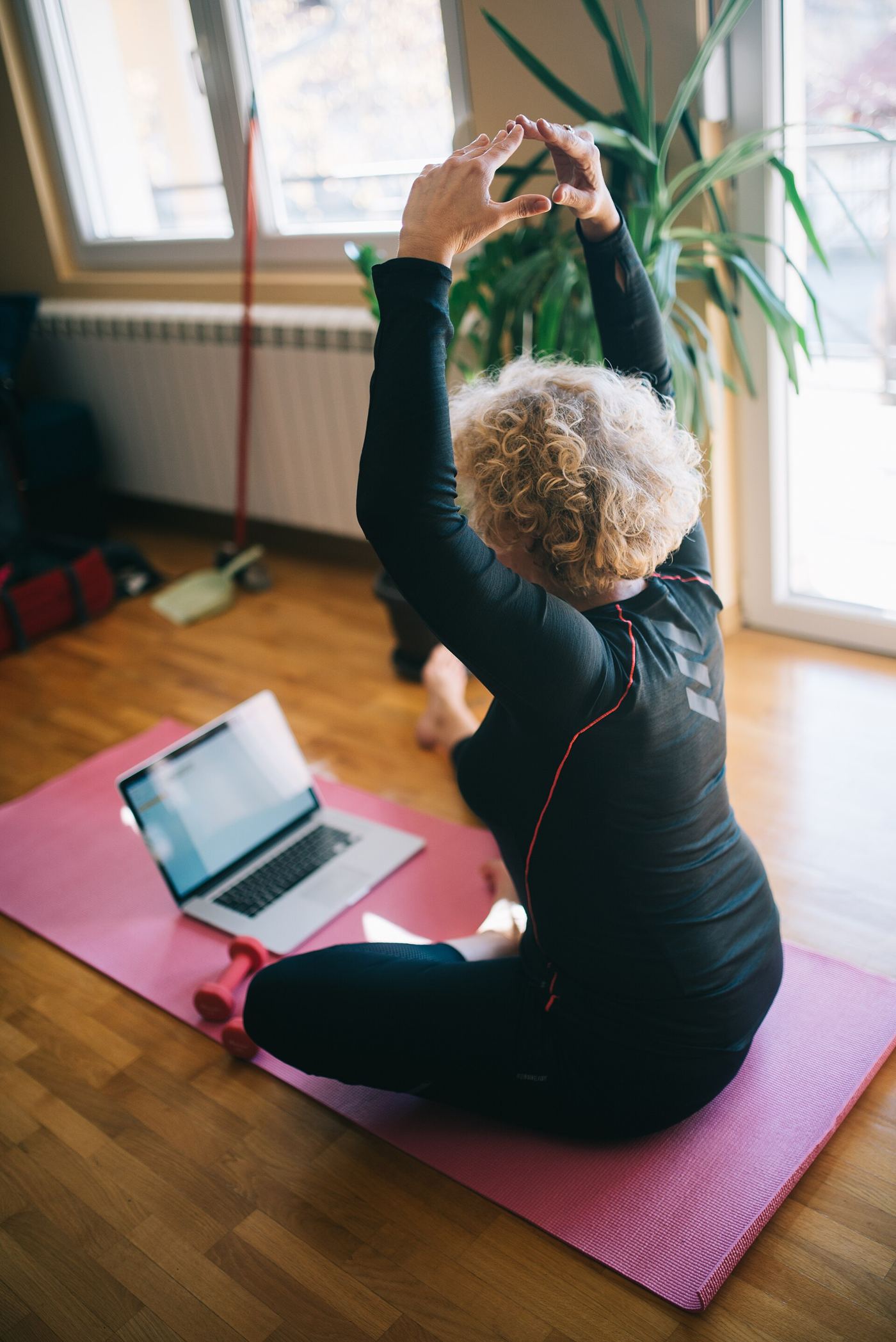
When outdoor exercise feels less appealing in colder weather, chair-based stretching offers a practical way for adults to keep joints moving and muscles feeling supple indoors. Using a sturdy chair for support and balance, gentle movements for the neck, shoulders, back, hips and legs can be done in ordinary clothes, in a small space, and without any special equipment. The appeal is accessibility. A short session can fit before breakfast, during a television break, or after a long period sitting at a desk, which makes it far easier to repeat than a longer workout that needs planning. Evidence on regular gentle movement consistently links it with better everyday mobility and comfort, though this article is general information only and not medical advice for any individual. Anyone with a recent injury, joint replacement, dizziness or a long-term condition should check with a clinician or physiotherapist before starting. Starting slowly matters. Movements should feel like a mild, pleasant stretch rather than a push into pain, and holding a position for a few calm breaths is usually enough. Over several weeks, many people simply notice that bending, reaching and getting up from a chair feel a little easier.
What the Evidence Shows
Building the habit is mostly about routine rather than intensity. Keeping the same chair in the same place, choosing a regular time of day and following a short set sequence removes daily decision-making. A simple order works well: gentle neck turns, shoulder rolls, a seated twist, ankle circles and a supported standing stretch to finish. Music or a favourite radio programme can set the length of the session and make it feel like a break rather than a task. It also helps to note progress in plain terms, such as reaching a shelf more comfortably or feeling less stiff first thing in the morning, because those small changes are easy to forget. If pain, swelling or unsteadiness appears, stopping and seeking professional advice is the right response. Paired with regular walks and ordinary household activity when possible, chair-based stretching becomes one steady part of an active indoor routine. It will not replace other forms of exercise for everyone, but for many adults it provides a realistic, low-cost way to protect flexibility through the winter months and beyond. Reporting and analysis from sources such as World Health Organization track the same developments, and specialists following chair based stretching flexibility say the direction is now consistent across independent lines of evidence.
The Wider Context
The wider context is a health system trying to move from treating illness late to preventing it early, against budgets that reward the opposite. Evidence around chair based stretching flexibility is being weighed by guideline committees that ask two questions in order: does it work, and can ordinary services actually deliver it at scale. Many good ideas pass the first test and stall on the second.
What Happens Next
What happens next for chair based stretching flexibility depends on the slow machinery of guidelines, funding and training catching up with the evidence. Patients asking about it today should expect honest answers that include uncertainty, and clinicians say a service that explains what is not yet known earns more trust than one that oversells. The research pipeline, at least, is moving in the right direction. You can follow related developments in our coverage of health.
There is a practical lesson in all of this for readers deciding what to do today. Start with the verified facts, be wary of anyone promising certainty, and prefer reversible steps while the evidence is still developing. Circumstances differ by country, income and personal situation, so general guidance should always be weighed against your own context before you act on it in any significant or lasting way.
